
Cats knead blankets because the motion is wired into them from kittenhood: pressing on their mother’s belly released milk, so soft fabric under their paws still signals safety, comfort, and warmth. Adult cats knead blankets to self-soothe, claim the spot with scent glands in their paws, and settle in before sleep.
If you share your home with a biscuit-maker, you’ve probably watched the ritual: paws pumping the fleece throw, eyes half-closed, maybe a little drool. It looks odd, but it’s one of the most reassuring behaviors a cat can show you. Here’s what’s behind it — and how to keep it comfortable for your cat, your blankets, and your bare legs.
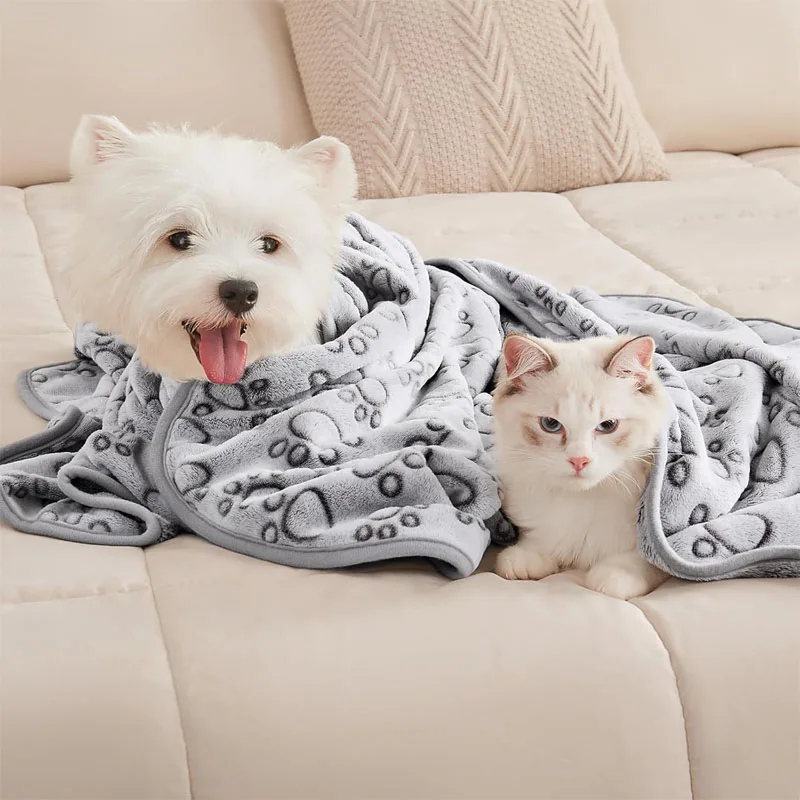
Where Does Kneading Come From?
Kneading begins in a kitten’s first days of life. Newborns press their paws rhythmically against their mother’s belly while nursing, which stimulates milk flow. The motion becomes deeply linked with warmth, food, and safety — and most cats carry it into adulthood.
Behaviorists call this a neotenic behavior: a kitten habit that persists in grown cats, much like the way adult cats meow mostly at humans rather than at each other. Kittens typically nurse for eight to ten weeks, and through that whole window kneading equals comfort. When your adult cat kneads, they’re replaying the coziest chapter of their life — which is why purring, slow blinks, and a dreamy expression usually come along for the ride.
Why Does My Cat Knead Blankets Instead of My Lap?
Blankets are simply the closest match to the original experience: soft, warm, yielding, and full of familiar scents. A fleece throw gives under the paws the way a mother cat’s belly did, which makes it the perfect kneading target.
There’s a second reason: scent. Cats have scent glands between their paw pads, and every push deposits a little of their signature on the fabric. A well-kneaded blanket smells like them, which makes it feel secure — one reason many cats return to the same blanket night after night and work it over before curling up. Some cats do prefer your lap, and that’s a compliment: you’re the comfort object. Others favor fabric because claws and thin skin don’t mix. Honestly, that’s a reasonable compromise for everyone.
What Is My Cat Telling Me When They Knead?
In almost all cases, kneading means your cat feels safe and content. It’s self-soothing, territory-marking, and nest-making rolled into one motion.
- Contentment. Kneading paired with purring and loose, relaxed body language is a cat at ease — the feline equivalent of a happy sigh.
- Bonding. Kneading you, or a blanket that smells like you, mixes their scent with yours. In cat terms, you’re family.
- Nest-building. Wild ancestors trampled down grass to make a sleeping spot. Ten pushes on the duvet before flopping down is the modern version.
- Self-soothing. Some cats knead more during stressful moments — a move, a visitor, a thunderstorm — because the familiar ritual is calming.
- Hormones. Unspayed females may knead more when in heat as part of courtship signaling.
Is Kneading Ever a Sign of a Problem?
Kneading itself is healthy at any age. The time to pay attention is when the pattern changes suddenly, or when kneading comes with sucking and chewing on fabric.
A cat who abruptly kneads far more than usual — especially alongside restlessness, hiding, over-grooming, or appetite changes — may be using the ritual to cope with stress or discomfort, and a quick vet check is worthwhile. Kneading that turns into sucking or chewing the blanket is common in cats weaned early (before about eight weeks) and is usually harmless comfort behavior. It becomes a real issue only if your cat swallows threads or pieces of fabric, which can cause digestive blockages. If your biscuit-maker is also a chewer, choose tightly woven fabric without loose threads, and put the delicate wool sweaters somewhere safe.
How Do I Make Kneading Better for Both of Us?
Don’t punish kneading — redirect it. Give your cat a dedicated soft spot, keep nails blunt, and protect precious fabrics, and the behavior stays as pleasant for you as it is for them.
| What you see | What it usually means | What may help |
|---|---|---|
| Kneading your lap, claws out | Affection, with pointy enthusiasm | Keep a folded blanket on your lap; trim nails every 2–4 weeks |
| Kneading one favorite blanket nightly | Nest-making before sleep | Let that blanket be theirs; wash it without heavy fragrance |
| Kneading plus sucking or chewing fabric | Leftover nursing instinct, often from early weaning | Offer sturdy, tightly woven fabric; add daily play |
| Sudden frantic kneading with restlessness | Possible stress or discomfort | Look for new stressors; see your vet if it persists |
A dedicated kneading station works better than defending your bedding ever will. A plush, machine-washable throw — like the Soft Fluffy Cozy Pet Blanket Set — can live on the sofa corner your cat already claims, so their scent builds on something you can wash rather than on your duvet. Cats who knead intensely before sleep often settle fastest in a bed with raised, yielding sides they can really sink their paws into, which is exactly why a Calming Donut Cat Bed tends to become the kneading target of choice.

Keep nails trimmed every two to four weeks so the biscuit-making stays gentle, and never consider declawing to manage kneading — it’s a painful amputation that can create far worse problems than snagged fleece. You can browse more comfort-focused picks in the PawKiro shop, but the honest truth is that the best kneading setup is any soft surface, in a quiet spot, that smells like the people your cat loves.
Cat Kneading FAQ
Why does my cat knead me instead of a blanket?
Kneading you is a social behavior: your cat is mixing their scent with yours and treating you as their safe place. Keep a folded blanket on your lap and trim nails every 2–4 weeks so the affection doesn’t sting.
Should I stop my cat from kneading blankets?
No — kneading is a normal, healthy comfort behavior. Instead of stopping it, redirect it to a durable, washable blanket or a plush bed, and only intervene if your cat is swallowing fabric or the behavior changes suddenly.
Why does my cat bite and suck the blanket while kneading?
Sucking or chewing fabric while kneading is a leftover nursing instinct, most common in cats weaned before about eight weeks old. It’s usually harmless, but swap in tightly woven fabric if your cat swallows threads, and see a vet if it becomes compulsive.