
If you’ve ever refilled the water bowl in the morning only to notice it looks untouched by evening, you’re not imagining it — your cat really might not be drinking enough. Cats evolved from desert-dwelling ancestors and have a naturally low thirst drive, which means many house cats hover on the edge of mild dehydration without their humans ever realizing it. The good news: why your cat won’t drink water almost always comes down to a handful of fixable reasons, and small changes at home can make a big difference.
Below are seven vet-backed fixes we’ve collected from veterinary sources and years of talking to fellow cat parents. Try them in order — most cats respond to the first two or three.
How Much Water Should a Cat Actually Drink?
A healthy adult cat needs roughly 3.5 to 4.5 ounces of water per 5 pounds of body weight per day, including moisture from food. A 10-pound cat on dry kibble should be drinking close to a cup of water daily; a cat eating mostly wet food may drink noticeably less because canned food is 70–80% moisture. If your cat has stopped drinking entirely for more than 24 hours, skip the tips and call your vet — that’s an emergency.
Why Won’t My Cat Drink Water? 7 Fixes That Actually Work
1. Swap the Plastic Bowl for Ceramic or Stainless Steel
Plastic bowls scratch easily, and those micro-grooves trap bacteria and hold on to smells that cats’ sensitive noses find off-putting. Some cats also develop feline acne from plastic. Switch to a shallow ceramic or stainless steel bowl and wash it daily with unscented soap. This one change alone often doubles how much a picky cat drinks.
2. Move the Water Away From the Food (and the Litter Box)
In the wild, cats instinctively avoid drinking near their kill because carcasses can contaminate a water source. That instinct is still wired in — a bowl parked right next to the food dish can be a subtle turnoff. Place water stations at least a few feet from food and even further from the litter box. Better yet, put two or three bowls in different rooms so your cat always has fresh water nearby.
3. Give Them Moving Water With a Fountain
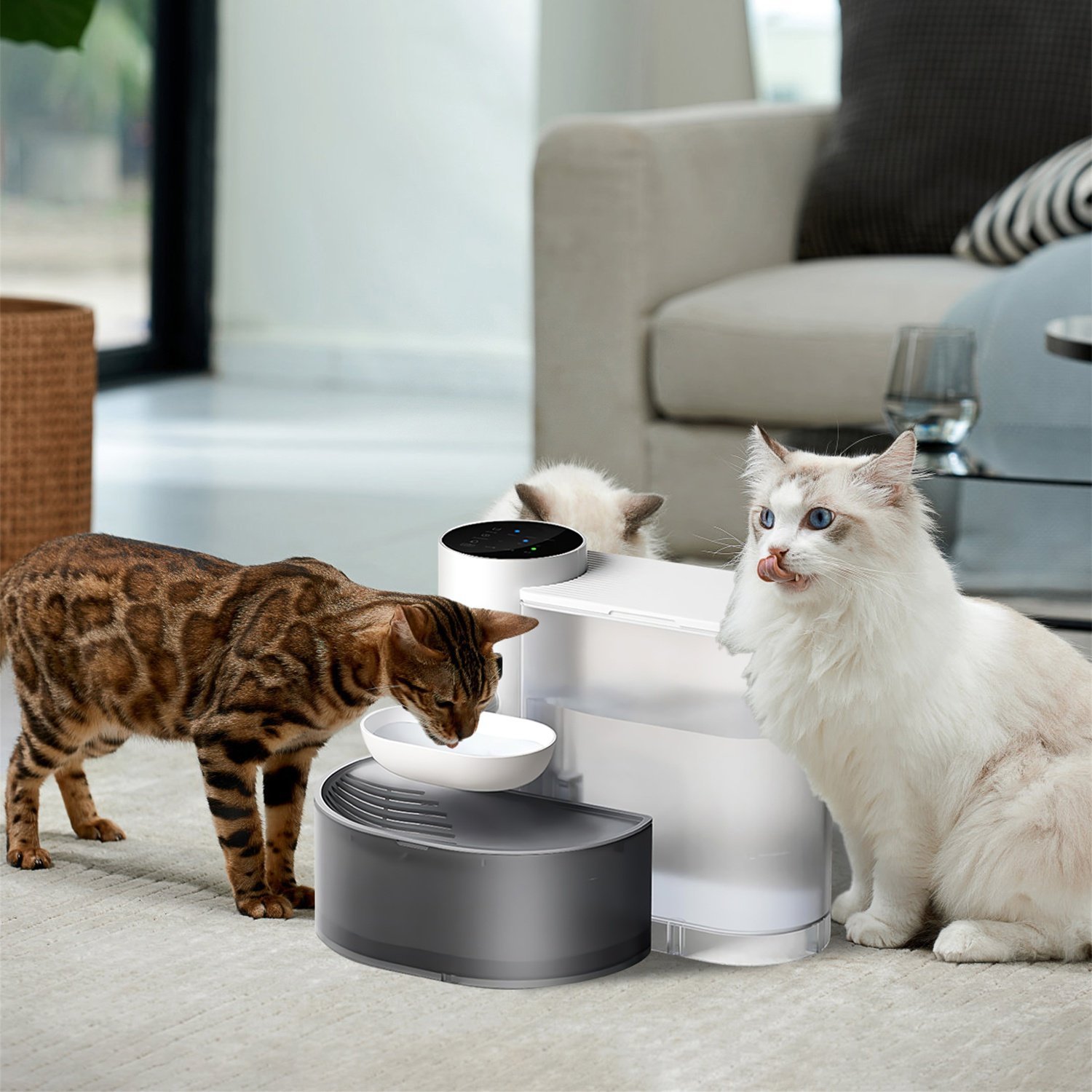
This is the single biggest upgrade for most households. Cats are hardwired to prefer running water because in nature, still water can be stagnant and unsafe. A quiet pet fountain circulates and aerates water continuously, which many cats find far more inviting than a bowl. If your current fountain hasn’t wowed your cat, check the noise level (loud pumps scare sensitive cats) and whether the filter needs replacing. Our Smart Cordless Cat Water Fountain is designed to run whisper-quiet with a 3L auto-refill reservoir, and keeping fresh replacement filters on hand keeps the water tasting like water — not plastic.
4. Refresh the Water Twice a Day
Even in a clean bowl, water picks up dust, fur, food particles, and airborne bacteria over the course of a day. Most cats can smell the difference between “just poured” and “sitting since breakfast.” A quick rinse and refill morning and evening is enough — and if you’re using a fountain, do a full deep clean every 1–2 weeks and change the filter monthly.
5. Try a Wider, Shallow “Whisker-Friendly” Bowl
Whiskers are packed with nerve endings, and when they brush the sides of a narrow, deep bowl repeatedly, some cats develop what’s called whisker fatigue — an unpleasant sensory overload. If your cat paws at the water, tips the bowl, or drinks from the faucet instead, the bowl shape may be the culprit. Look for a wide, shallow dish where the whiskers don’t touch the rim.
6. Add Moisture to Meals
If your cat is a dry-food loyalist, meet them halfway. Options that work well:
- Mix in wet food a few times a week — even a spoonful adds meaningful moisture.
- Splash warm water or unsalted, onion-free bone broth onto kibble to make a “gravy.”
- Freeze low-sodium tuna water into ice cubes and drop one in the bowl as a flavor boost.
- Use a lick mat smeared with wet food thinned with water — it slows them down and sneaks in extra hydration.
7. Elevate and Angle the Bowl
Older cats and cats with arthritis or dental sensitivity often stop drinking simply because bending over the bowl hurts. A raised, tilted bowl brings the water to a more comfortable neck angle and can make daily drinking feel effortless again. It’s a small tweak that pays off fast for senior cats.
Quick Comparison: Fountain vs. Bowl vs. Multiple Bowls
| Setup | Best For | Watch Out For |
|---|---|---|
| Single ceramic bowl | Low-maintenance homes, cats who drink well already | Water goes stale fast; easy to forget refills |
| Multiple bowls around home | Multi-cat households, large apartments | Requires daily washing of each bowl |
| Pet fountain | Picky drinkers, dry-food eaters, kidney-prone breeds | Needs filter changes and monthly deep clean |
| Wet food + water added | Any cat, especially seniors | Costlier than dry; must be refrigerated once opened |
Warning Signs Your Cat Is Already Dehydrated
Even a few days of low intake can tip a cat into dehydration. Check for these signs weekly:
- Skin that stays “tented” when you gently pinch the scruff instead of snapping back
- Sunken or dull-looking eyes
- Tacky, dry gums (healthy gums feel slick and wet)
- Lethargy or hiding more than usual
- Reduced or dark, concentrated urine in the litter box
If you notice two or more of these — especially in a senior cat or a cat with known kidney or thyroid issues — call your vet the same day. Dehydration can become life-threatening within 72 hours.
Set Your Cat Up for Hydration Success
The most reliable long-term fix is a combination approach: a fresh, moving water source they trust, at least one backup bowl in another room, moisture-rich meals, and a weekly habit of watching the litter box for changes. Once you find the combination your cat prefers, stick with it — cats reward consistency with better drinking habits. Browse the full PawKiro shop for hydration and comfort essentials built around how cats actually behave.
FAQ: Cat Hydration
How long can a cat go without water?
Cats can survive about 3–4 days without water, but organ damage can begin within 24–48 hours. Any refusal to drink for a full day warrants a vet call.
Do cats need a water fountain, or is a bowl enough?
A bowl is fine for cats who drink well on their own. Fountains help most for picky drinkers, dry-food-only cats, and breeds prone to kidney or urinary issues like Persians, Maine Coons, and Ragdolls.
Why does my cat prefer drinking from the faucet or my glass?
Two reasons: moving water tastes fresher to cats, and taller drinking vessels are usually whisker-friendly. A quiet pet fountain plus a wider bowl usually solves both.